
Dr. Judith King-Calnek
When did you first become interested in Brazilian music?
I’ve always been interested in music and am not sure when I actually distinguished between musical genres. I remember loving songs like “Summer Samba” (by Marcos Valle & his brother) and Sergio Mendes and Brasil 66, and other things that entered into the rotations of American radio stations during the Bossa Nova invasion, but I didn’t think of them as or know them to be Brazilian. I think in the late ’60s and early ’70s even the popular radio stations were much more open to a wider array of sounds, from Brazil, Africa (hits from Hugh Masakela, Miriam Makeba and Manu Dibango), which opened up a lot of musical space for anyone who was musically curious.
I think in the late ’60s and early ’70s even the popular radio stations were much more open to a wider array of sounds, from Brazil, Africa […] which opened up a lot of musical space for anyone who was musically curious.
What was the first album that really stood out to you and what was special about it?
There were two albums: first was Flora Purim’s “Open Your Eyes You Can Fly”, which completely blew my mind. The other was Gilberto Gil’s “Nightengale”, which really excited me. Later I would come to realize that Gil’s “Nightengale” was an Americanized version of his Brazilian release “Refavela”, which I prefer. Both Flora’s and Gil’s music felt liberating. The rhythms were infectious and the melodies dared to go where other music didn’t go.
With so much music to choose from, how did you decide on which recordings to highlight in “The Brazilian Journey”?
I tried to think of music that exemplifies different historical, geographical, and musical phases in Brazil. It’s really hard because there’s SO much great music that inevitably something will be left out.
Is there anything you wish you’d covered, but couldn’t fit?
I woke up the other night, at about 2 in the morning and said, “Oh no! I didn’t talk about the Quilombo dos Palmares! or the Tailor’s Revolt (Revolta dos Alfaiates)! I didn’t talk about the Samba Schools Portela and Mangueira! I didn’t talk about this year’s carnival themes. Did I mention that Paulo Moura was not only a great saxophonist, but clarinetist as well? I should’ve ended with Trio da Paz and other great Brazilian musicians here in New York…” and on and on. In short, there is a LOT that I didn’t include. I’m sorry. I hope my musician friends and lovers of the music will forgive me.
What are a few key points you’d like listeners to take away from TBJ?
Brazil is a huge country — larger than the continental United States. It has an incredibly rich history, a dynamic present and a very promising future. I’m just offering a very small taste, the tip of the iceberg, if you will, to whet your appetite for the delicious world of Things Brazil.
How was the experience doing a radio documentary like this?
I LOVED working with Joyce Jones! It felt like spending time with two friends: great Brazilian music and Joyce. I am hopelessly in love with Brazil, its music and culture, and it brings me immense pleasure to share that passion with other folks. Also, I love doing radio and have missed it sorely since I’ve been off the air, so this was a great experience for me. Thank you very much for inviting me. Muito obrigada!
What do you think radio’s importance is in a world of video on demand and seemingly unlimited streaming audio options?
I’m an old time radiohead, so my view is a biased one. I like the organic relationship that radio has with a live audience. There is something very rich about local radio. But I do have to say that I love the fact that I can stream stations and listen even if I’m out of the area.
Is there anything else you’d like to add?
Just that I’ve really enjoyed this experience and thanks again for inviting me. It’s helped me fight away the winter blahs.
Excerpts from “The Brazilian Journey” will air on WBAI Radio, 99.5 FM in the NYC area and streaming online at wbai.org from 11 PM – 1 AM Eastern Standard Time on February 16, 2013. You can make a pledge for the entire set on CDs at WBAI’s donation site.
Judith King-Calnek teaches anthropology, theory of knowledge and history at the United Nations International School, where she is the Head of the Humanities Department. She has taught anthropology at Manhattanville College in Purchase, NY. Her publications have focused on education and citizenship in various contexts (international schools, Brazil and the United States). Her most recent publications on free people of color in 19th Century Virginia reflect her continued interest in the intersection of race/color and citizenship in socially stratified societies. King-Calnek holds a Ph.D. in comparative education and anthropology from Teachers College Columbia University as well as two master’s degrees (curriculum and teaching and anthropology and education) from the same institution, and a BA from Pomona College. In addition to her teaching and researching, Judith King-Calnek pursues her long time love of Brazilian music and jazz as a radio programmer and producer in the New York area, for which she has received numerous awards. She is fluent in Portuguese and Spanish.
Hank Williams is a assistant producer for Suga’ in My Bowl on WBAI Radio and webmaster for the Suga’ and Behind the Mic sites. He is also a PhD candidate in English and Africana Studies at the CUNY Graduate Center and teaches at Hunter and Lehman Colleges and The City College of New York.

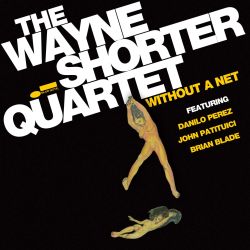 Meanwhile, Wayne Shorter’s making the rounds with his new release, titled
 Behind the Mic